Our online raffle to accompany our fundraiser opens on July 15th and will be live until August 15th. Prizes will be handed out at the entrance to our Preserve (pictured above) on August 22nd, 2026 at 5pm.
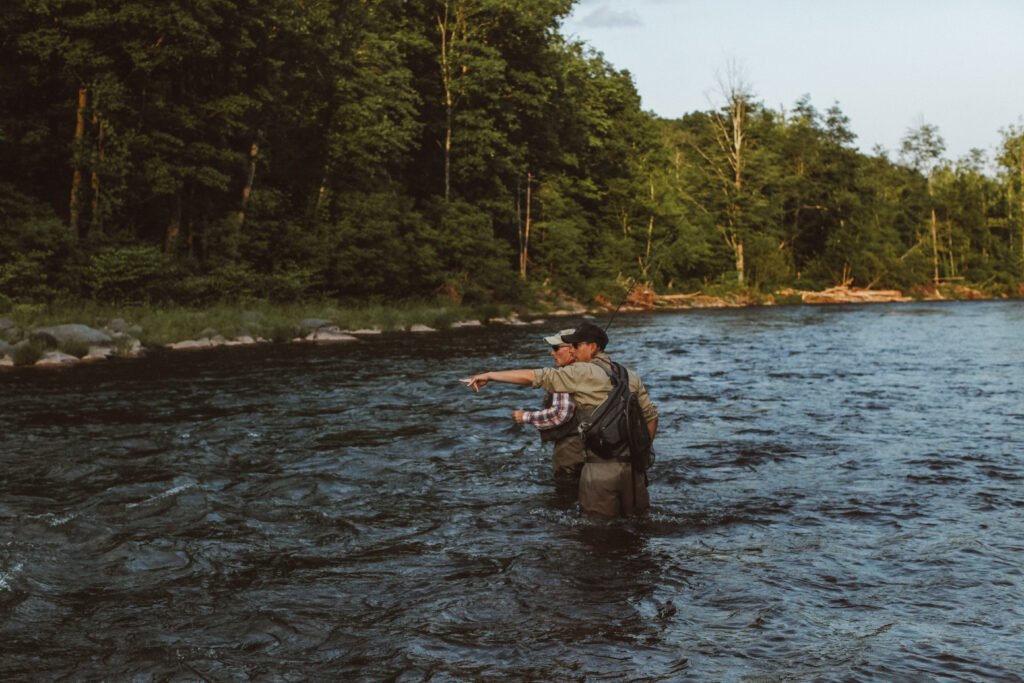
Todd Spire of Esopus Creel has generously donated a four-hour guided fishing tour to our online raffle, which is part of our summer fundraiser that takes place on August 22nd, 2026. The raffle goes live online on July 15th! Watch out for details coming soon.
As if summer could get any more exquisitely beautiful here at the East Branch Nature Preserve, but now the historic train runs alongside the trail.
On Saturdays throughout July and August, The Delaware & Ulster Railroad operates scenic train rides out of the Arkville Depot, making for a picturesque sight at the trailhead four times a day.
So now we have two spectacular vistas to enjoy: one on land, and one on water to accompany the hiker on this gentle trail.
On Saturday July 4th, as the vivid green leaves wavedly lazilly overhead, protecting the trail from the heat of the scorching summer sun, the large engine Delaware & Ulster train trundled past the trail at the trailhead. First you hear a gentle whistle in the distance, then comes a series of frequent dings, and chugging of the engine as the train approaches the entrance to the preserve. The train runs backwards on the return journey and when it does this, you will hear two long whistles and a series of shorter whistles until the train passes.
It’s a little magical, slice of charming heaven, especially when a sea of shining faces are all smiling at you as they glide by, waving.
Go to their website to book tickets. The train runs north-south from Arkville to Route 30 and then returns to Arkville and goes on for two miles towards Fleischmanns and back.
The cost of tickets goes towards necessary repairs to the track. Once these repairs are made, the DURR can conduct longer tours that go to the historic depot in Roxbury. Please support our local scenic treasures. Go here to book tickets.
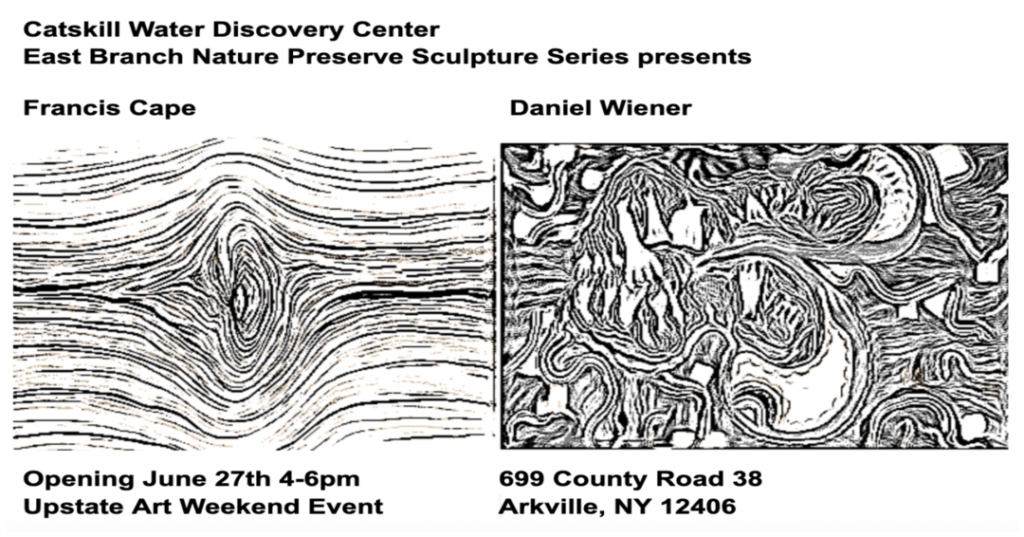
As part of Upstate Art Weekend, the East Branch Nature Preserve’s Outdoor Sculpture Series presents on-site, outdoor sculptures by artists Francis Cape and Daniel Weiner along the Preserve trail.
Working with EBNP and the Catskill Forest Association, Francis Cape repurposed invasive Norwegian spruce and Norwegian maple to construct a replica of an English blanket chest, echoing those once used by immigrant farmers in Delaware County. The work positions invasive species alongside contemporary immigration narratives, while invoking the site’s history as 19th-century farmland.
In response, Daniel Wiener presents a sculptural table for EBNP’s outdoor classroom that is both functional and expressive. Formed with epoxy clay into fantastical, animated forms, the table channels a shared emotional landscape shaped by uncertainty and dislocation.
Where Cape looks to the past – tracing histories of movement, settlement, and material transformation – Wiener gives form to the present tense: a collective state of being at a loss, wide-eyed with disbelief, open-mouthed with astonishment, and edged with quiet panic. Together, the works move between inheritance and immediacy.
Discover art, history, and the beauty of nature reimagined at the East Branch Nature Preserve.
Location: The East Branch Nature Preserve, 699 Co Rd 38, Arkville, NY 12406.






Recent Comments